Category: Boundaries & Self-Expression · Reading Time: 8 min
You knew before the question finished. Somewhere around the second sentence — while they were still describing what they needed — you already knew you didn't want to. You felt it. A small flinch, a tightening in the chest, a quiet internal no that formed and then immediately got buried under the word that came out of your mouth instead.
Yes.
And now it's on your calendar, in your head, eating a piece of Sunday afternoon you didn't want to give. And you're not even angry at them — you're vaguely angry at yourself, which is somehow worse.
You're not alone in this. And it's not a willpower problem.
The Yes Habit Loop
What most people don't realize is that the automatic yes doesn't start with the word. It starts with a threat scan. The moment someone makes a request — even before you've consciously registered what they're asking — your nervous system runs a rapid calculation: What happens if I disappoint this person?
For people who've been running the yes habit for years, the answer to that question is viscerally unpleasant. Something bad. Loss. Rejection. Conflict. The relationship destabilizes.
The yes arrives to prevent that. It's a safety response. And safety responses are fast — they have to be. Which is why the yes comes out before you've had time to think, and why "just say no" advice always misses the point.
The Threat Is Usually Old
Here's what's almost always true in the yes habit: the threat being scanned for is not the current person in the current moment. It's an old threat — a parent, an early relationship, an environment where disapproval had real consequences for your safety or belonging.
Your nervous system learned a rule: displease someone, and something important gets damaged. And it still applies that rule to your coworker asking if you can help with their presentation on Friday. The stakes feel identical. They are not. But the body doesn't know that without help.
What Every Unmeant Yes Costs
The individual yes looks small. A favor here, an afternoon there, a commitment you didn't want to make. The cumulative cost is not small at all:
- Time — hours you didn't want to give, that don't restore
- Energy — depleted by the resistance your body carries even while the yes is in the room
- Identity — the slow blurring of who you are into who is useful
- Self-trust — each override erodes your confidence in your own instincts
And underneath all of it: resentment. Not at the other person, usually. At yourself, for not being able to hold a line you keep drawing and crossing.
The One Practice That Changes It
The yes habit lives in the gap between request and response — and it fills that gap so fast there's no apparent gap at all. The intervention that works is not willpower. It is space.
One breath before you answer anything. Not a visible, theatrical pause — just an inhale and exhale, during which you ask internally: do I actually want to do this?
The answer will come as a physical sensation before it comes as a word. A tightening. A drop. A lift. Your body knows. You've just been moving too fast to let it answer.
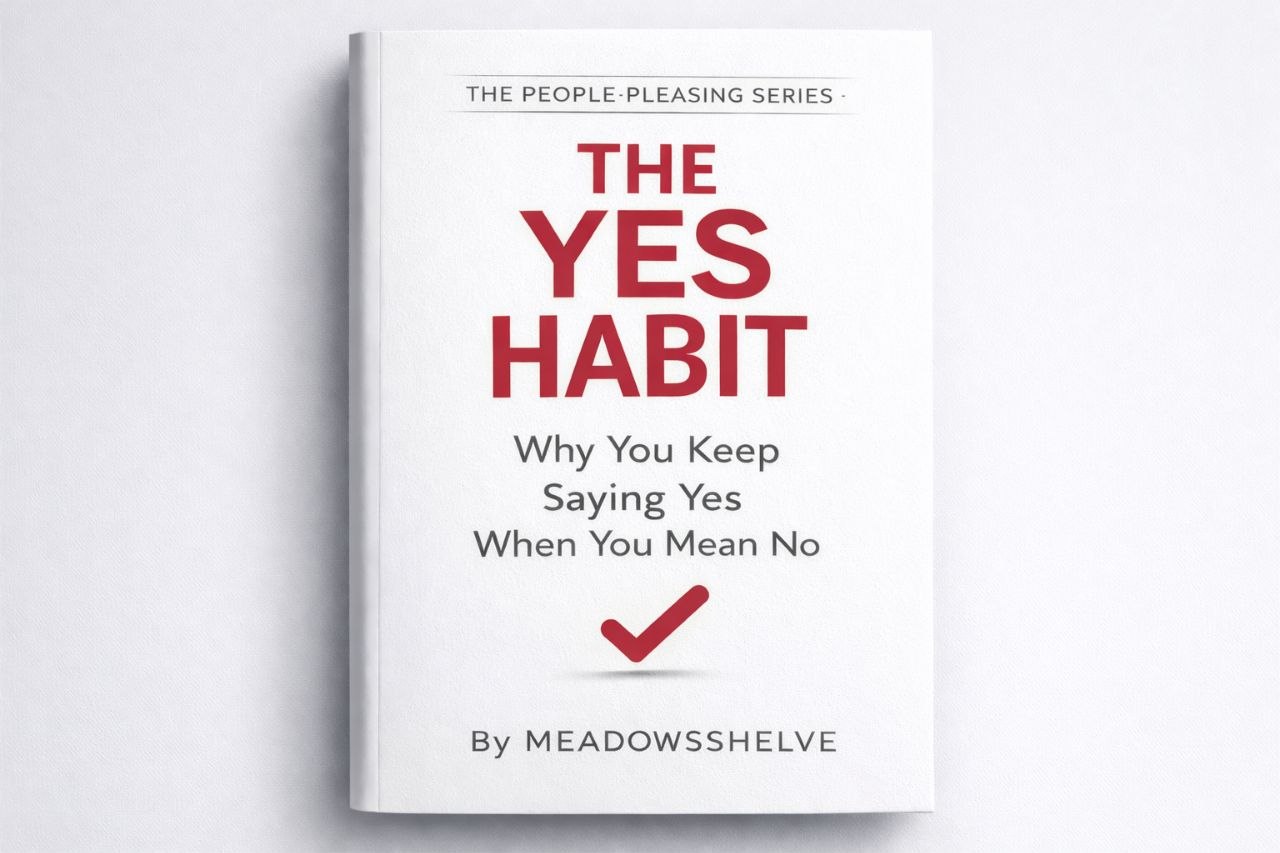
The Yes Habit walks you through the full loop, the five yes personalities, and a 30-day practice for building the pause into your daily life.